



But What Exactly Are “Guitar Choirs”? – Symposium at Villa-Hild
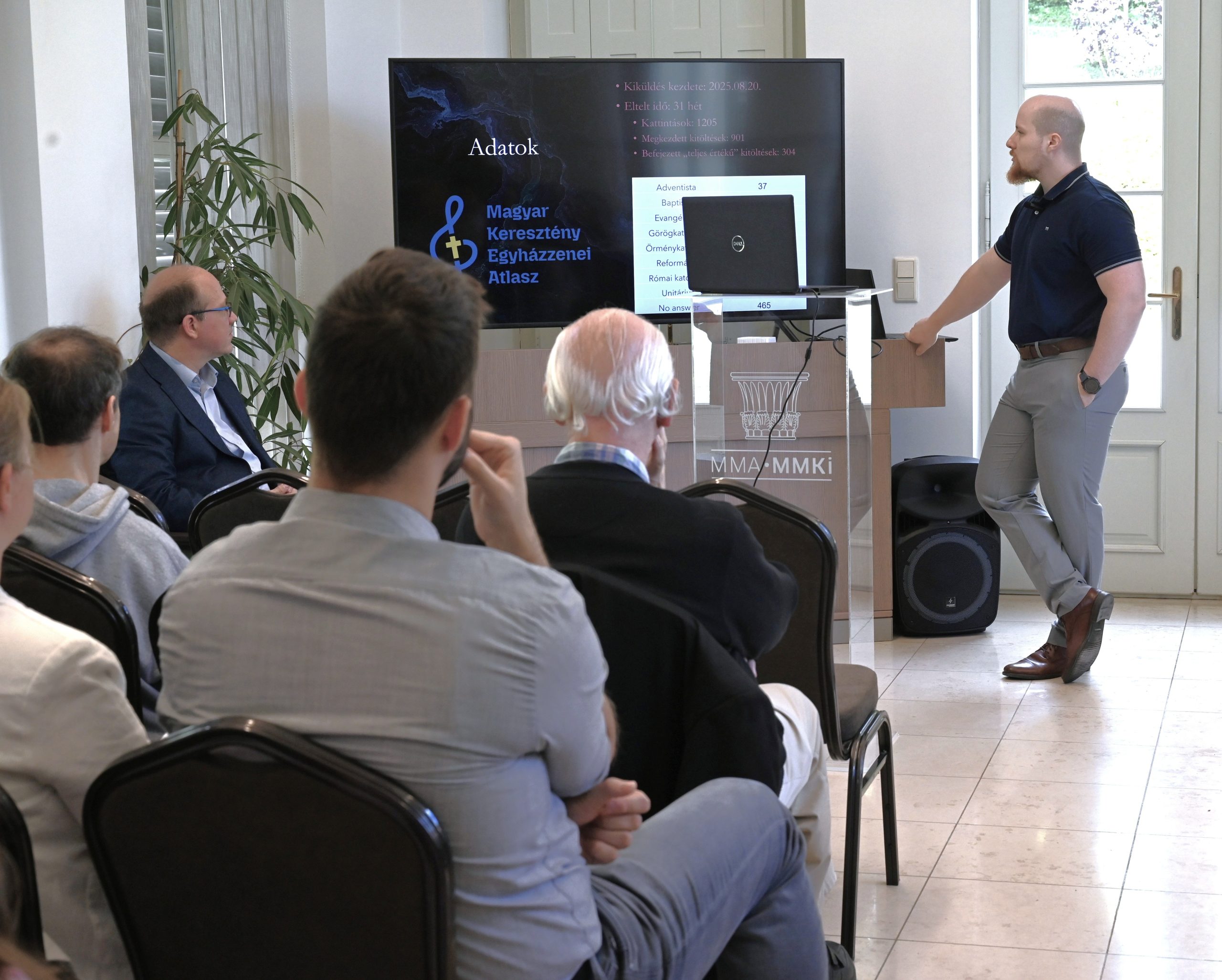
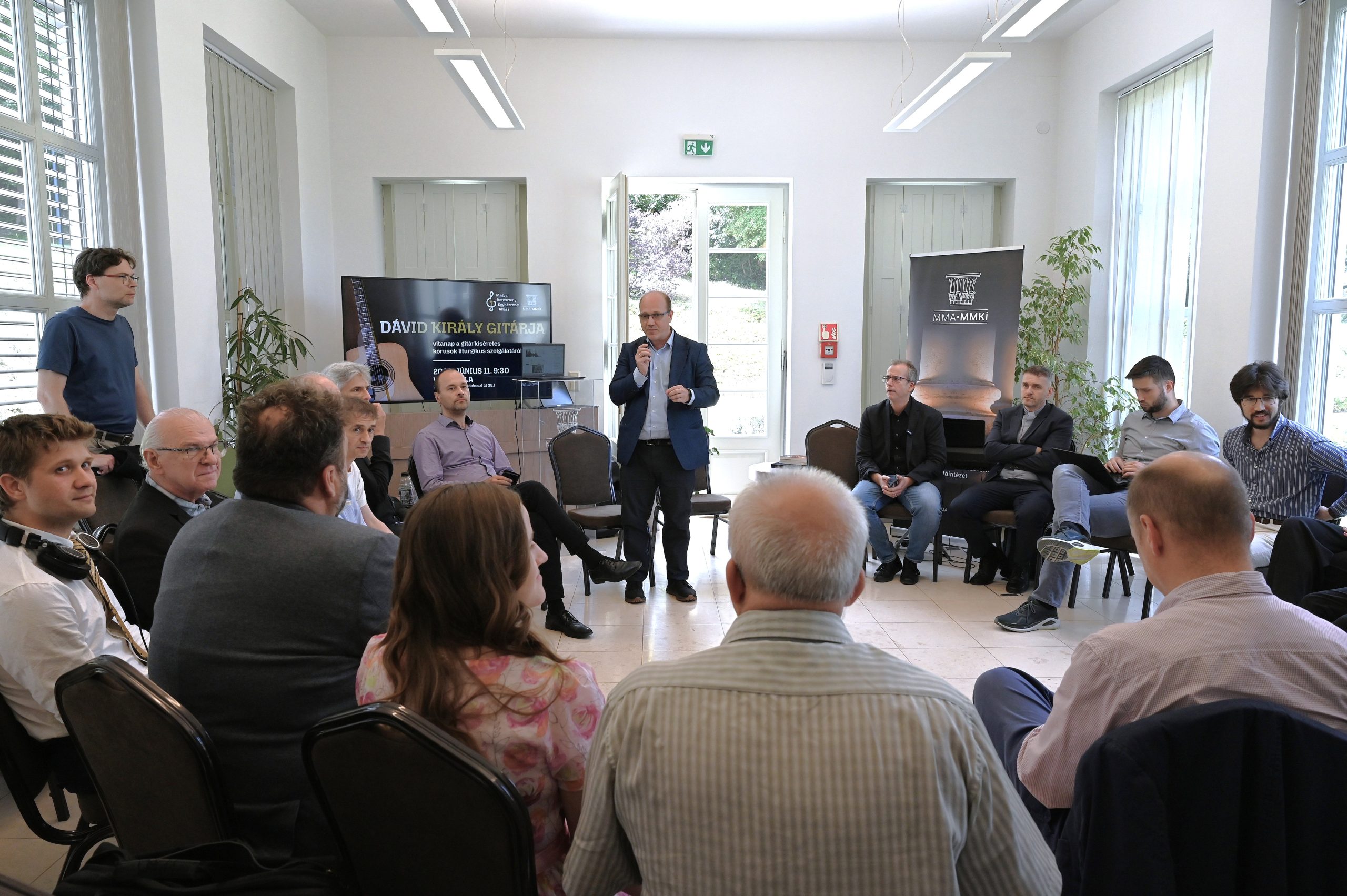
The editorial board of the Hungarian Christian Atlas of Church Music (MAKEZA) held its second debate forum on 11 June 2026, titled “King David’s Guitar”, the main subject of the event being the liturgical service of choirs with guitar accompaniment. The Research Institute of Art Theory and Methodology at the Hungarian Academy of Arts founded MAKEZA in February 2025 with its goal of studying choirs serving in the liturgy. The editorial staff launched the online data gathering on 20 August 2025. A total of 306 complete and 800 partial responses were received. Contrary to initial expectations, not only traditional, classical liturgical music was found among the repertoire of the studied choirs, but also the works performed with the accompaniment of a guitar. The research team was surprised that among the communities providing complete responses, approximately one third defined themselves as “guitar choirs”. Data relating to guitar-accompanied choirs was found especially in large numbers among the answers given by the Catholics and Calvinists. Participants of this event were searching for the answers to what exactly a “guitar choir” is, what they play, and what kind of liturgical preparation they had.
In the first half of the symposium, the staff raised the following questions: what the key issue surrounding guitar choirs is. Is it the rhythmic, melodic or harmonic patterns of the songs? The variations in the lyrics? Could it be that certain denominations place liturgical demands which can’t be met by popular songs on the guitar? Or perhaps it’s “merely” a matter of generational differences, as seen in the division of the Rejtő-generation, the cohort of Lőrincz L. László and the readership of Laura Leiner.
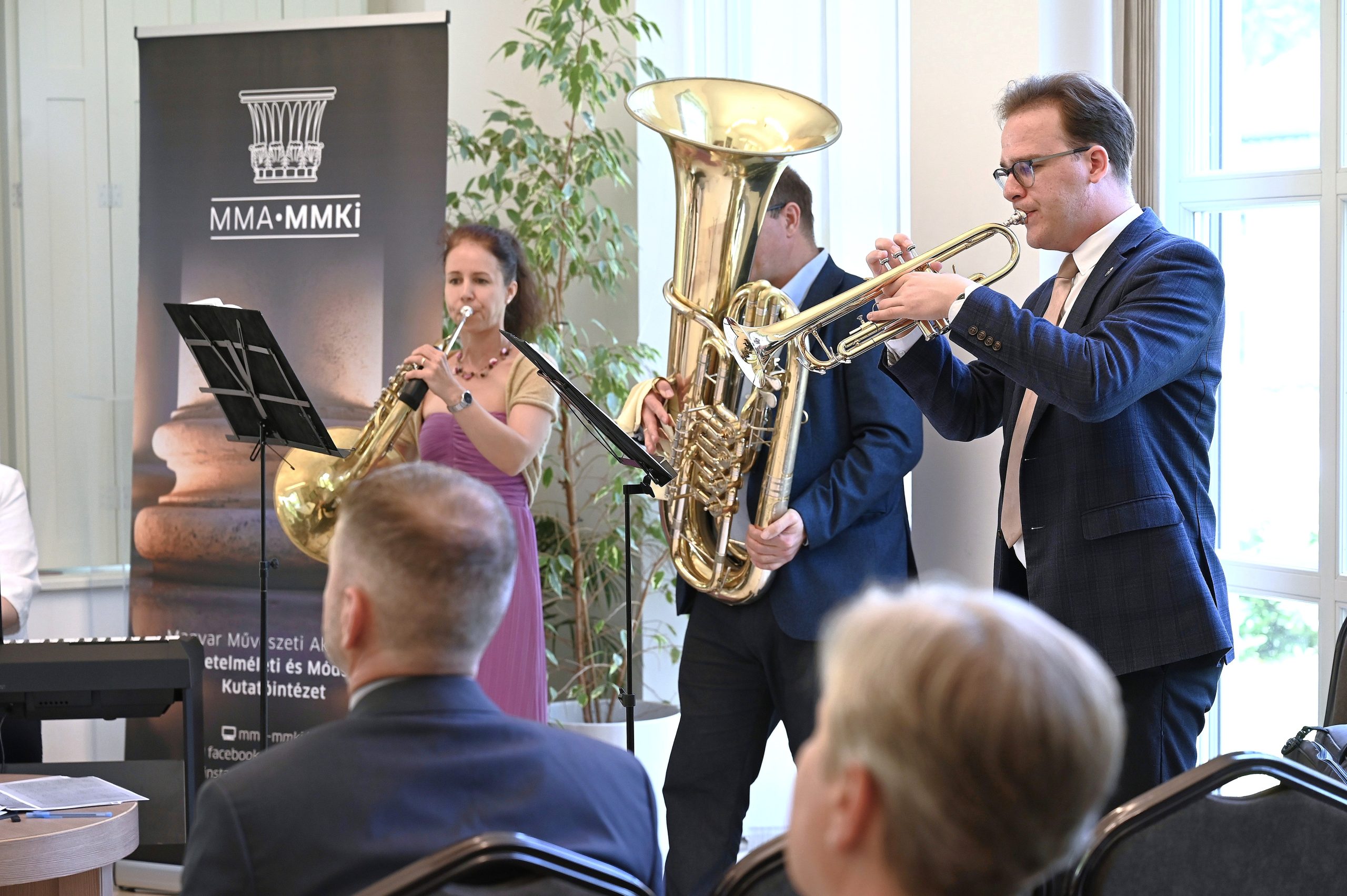
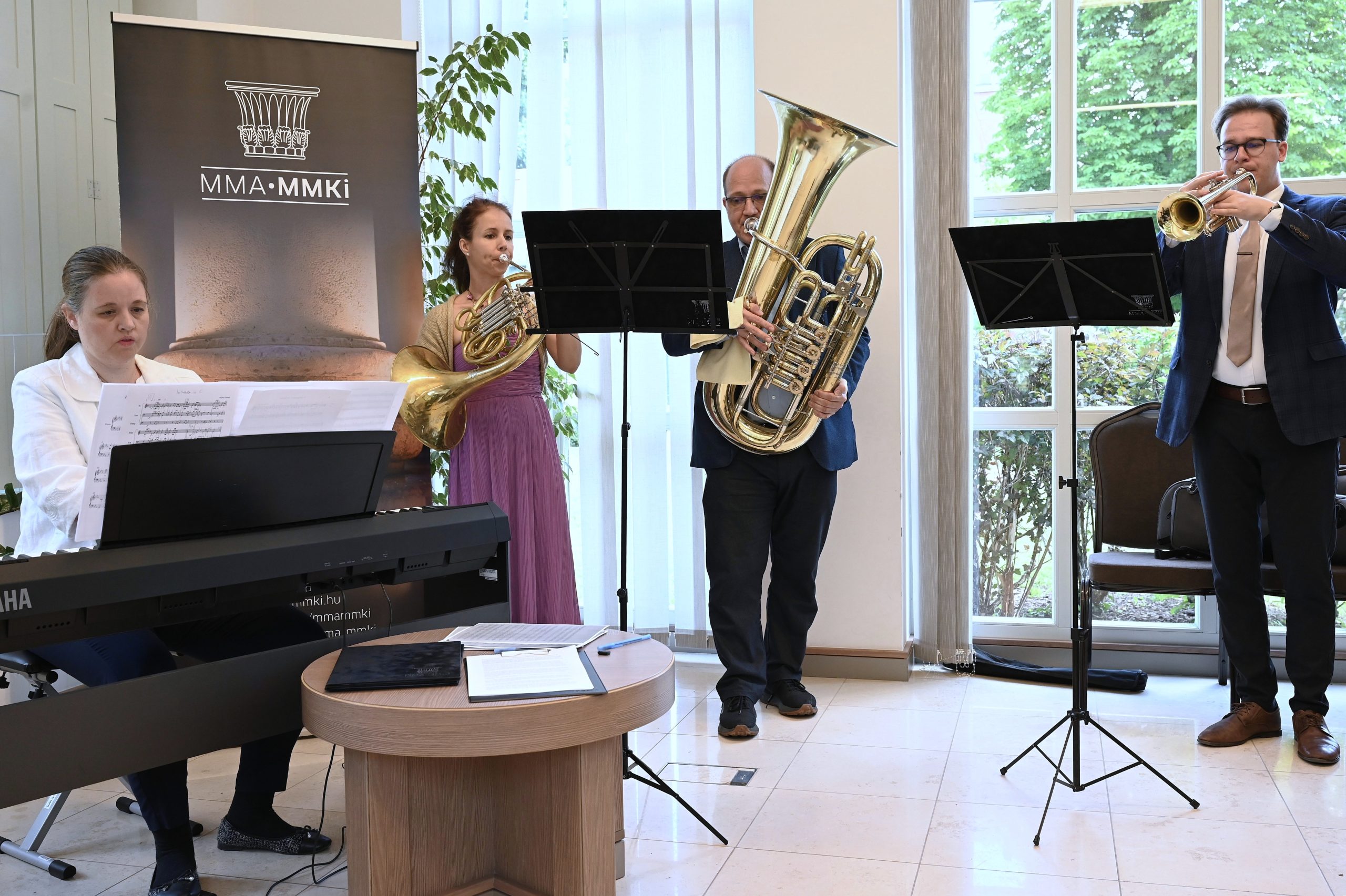
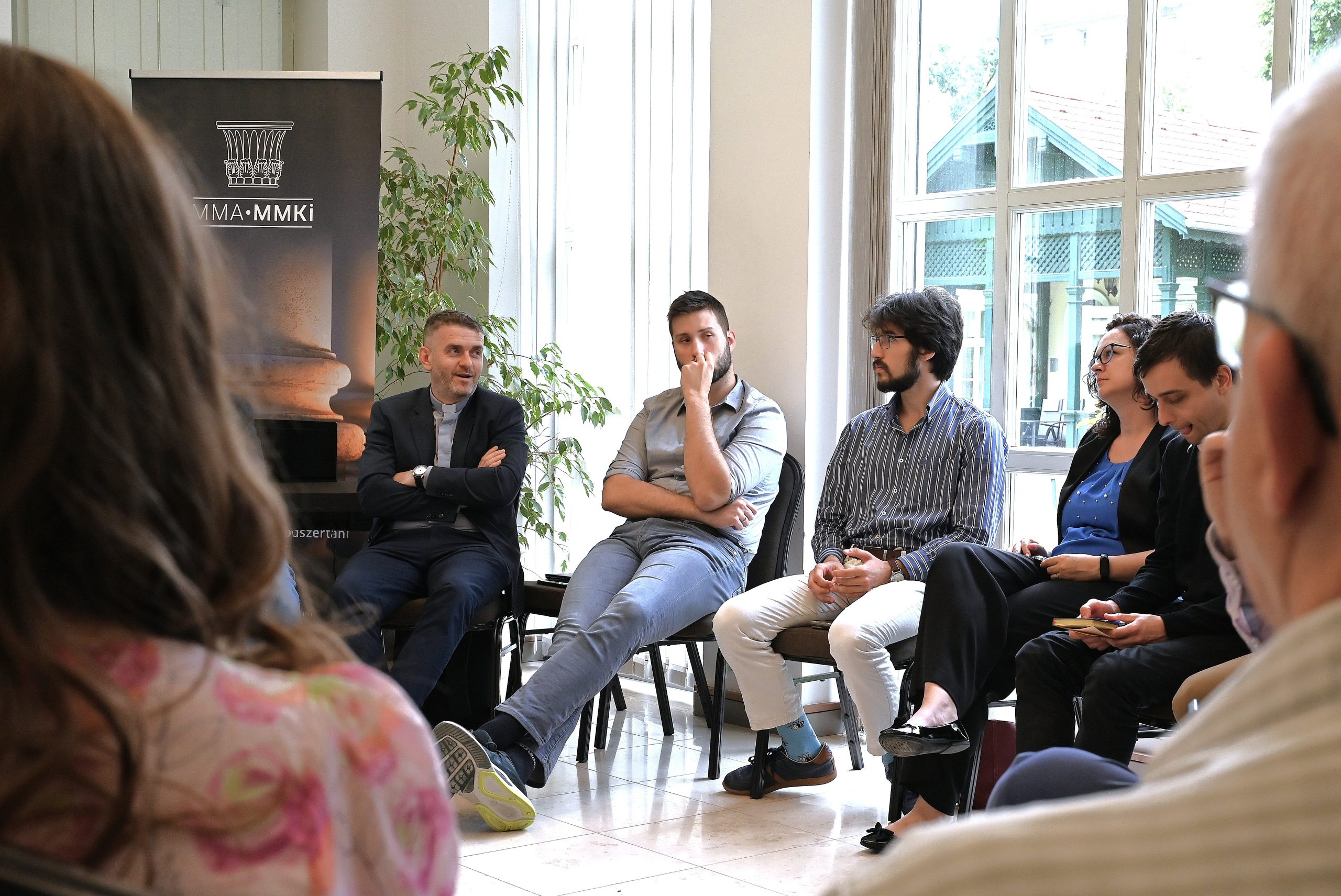
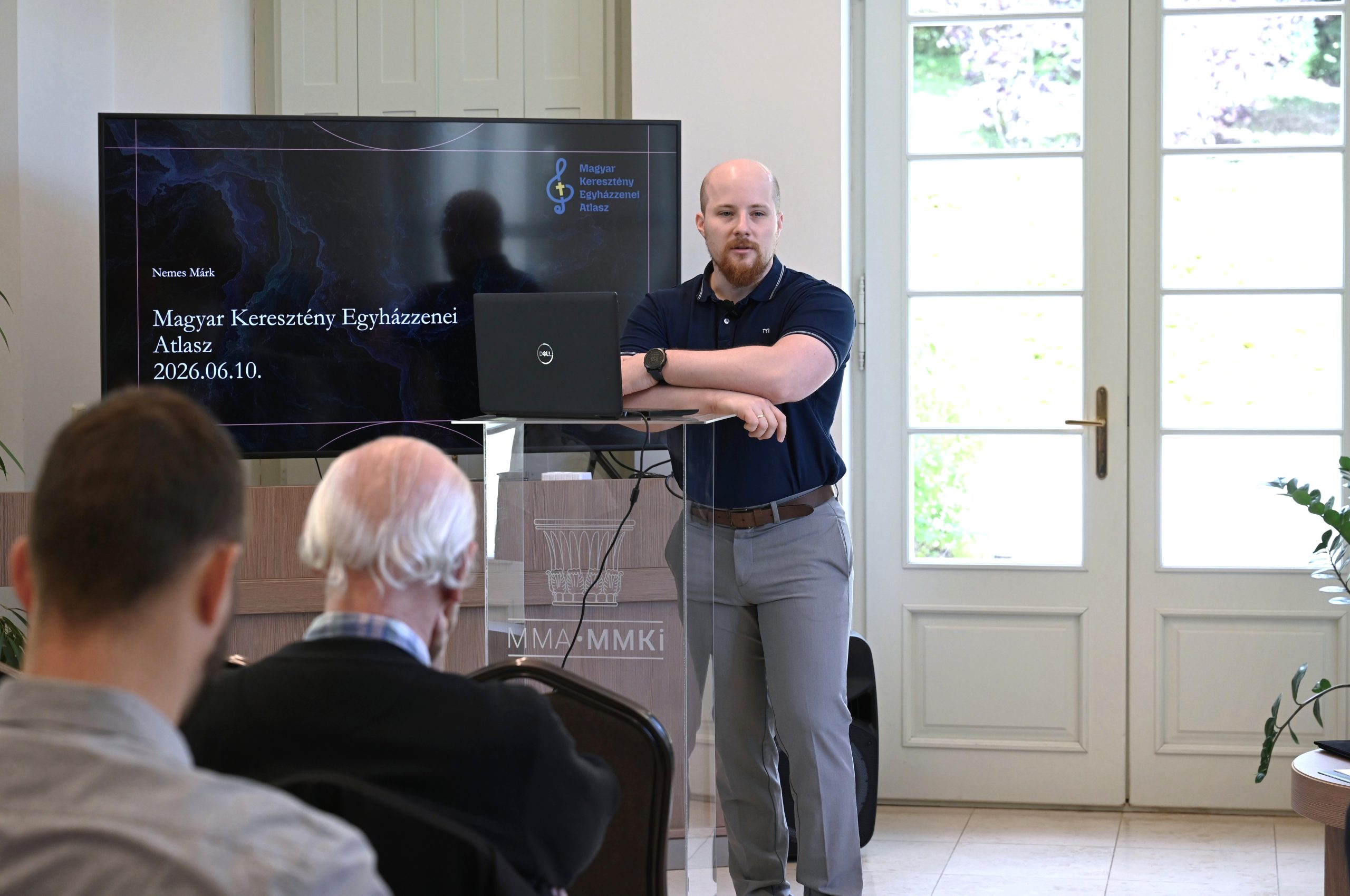
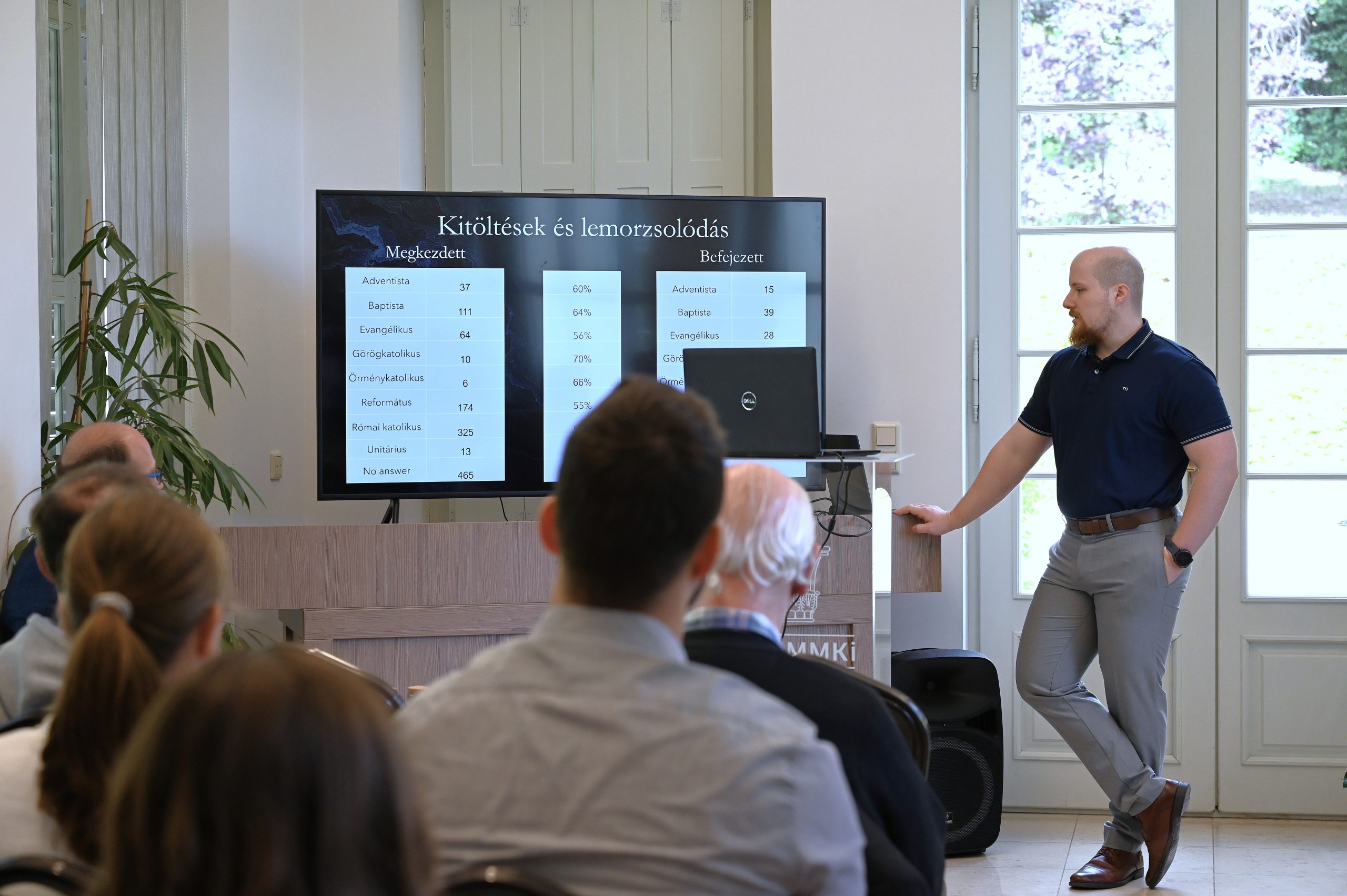
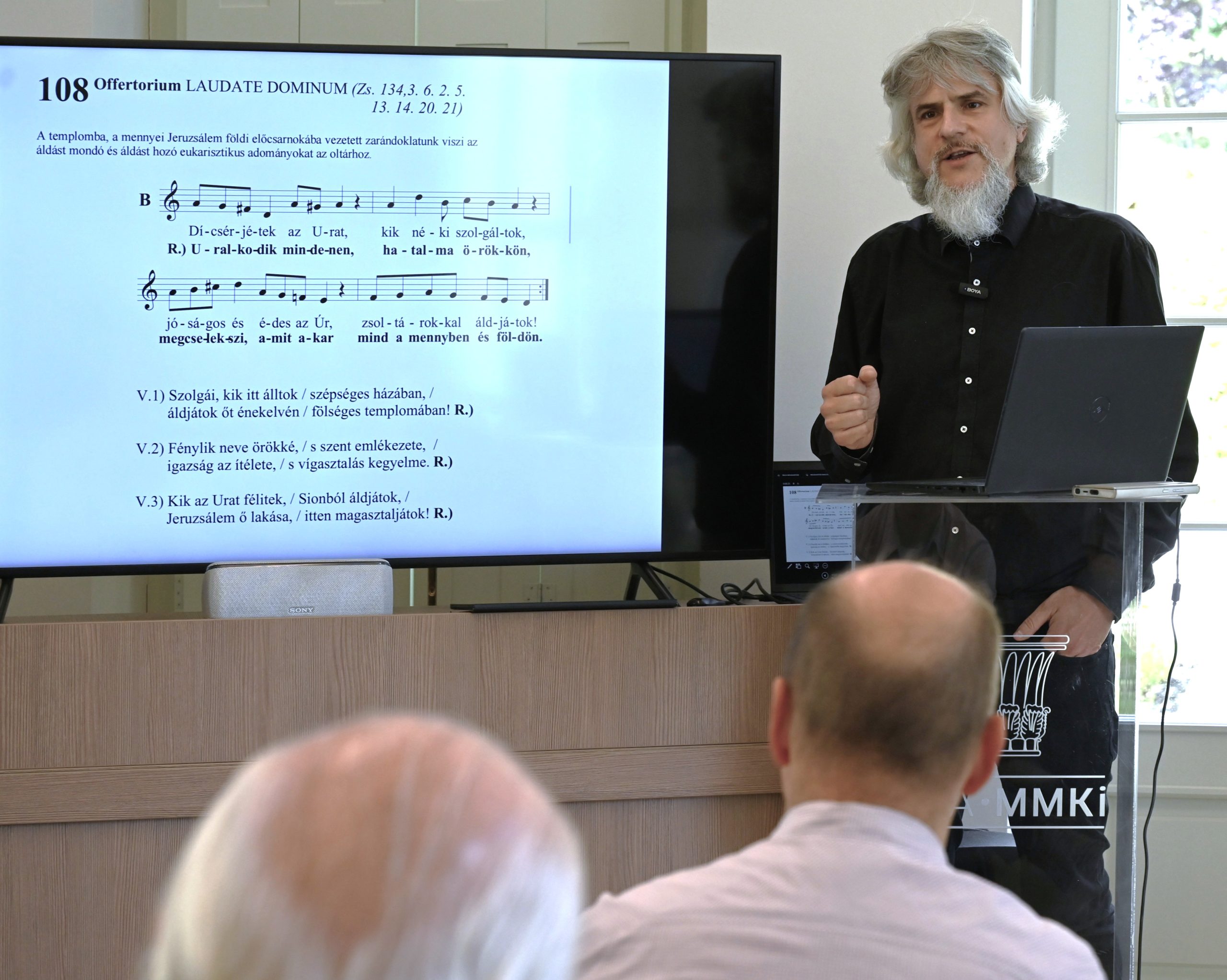
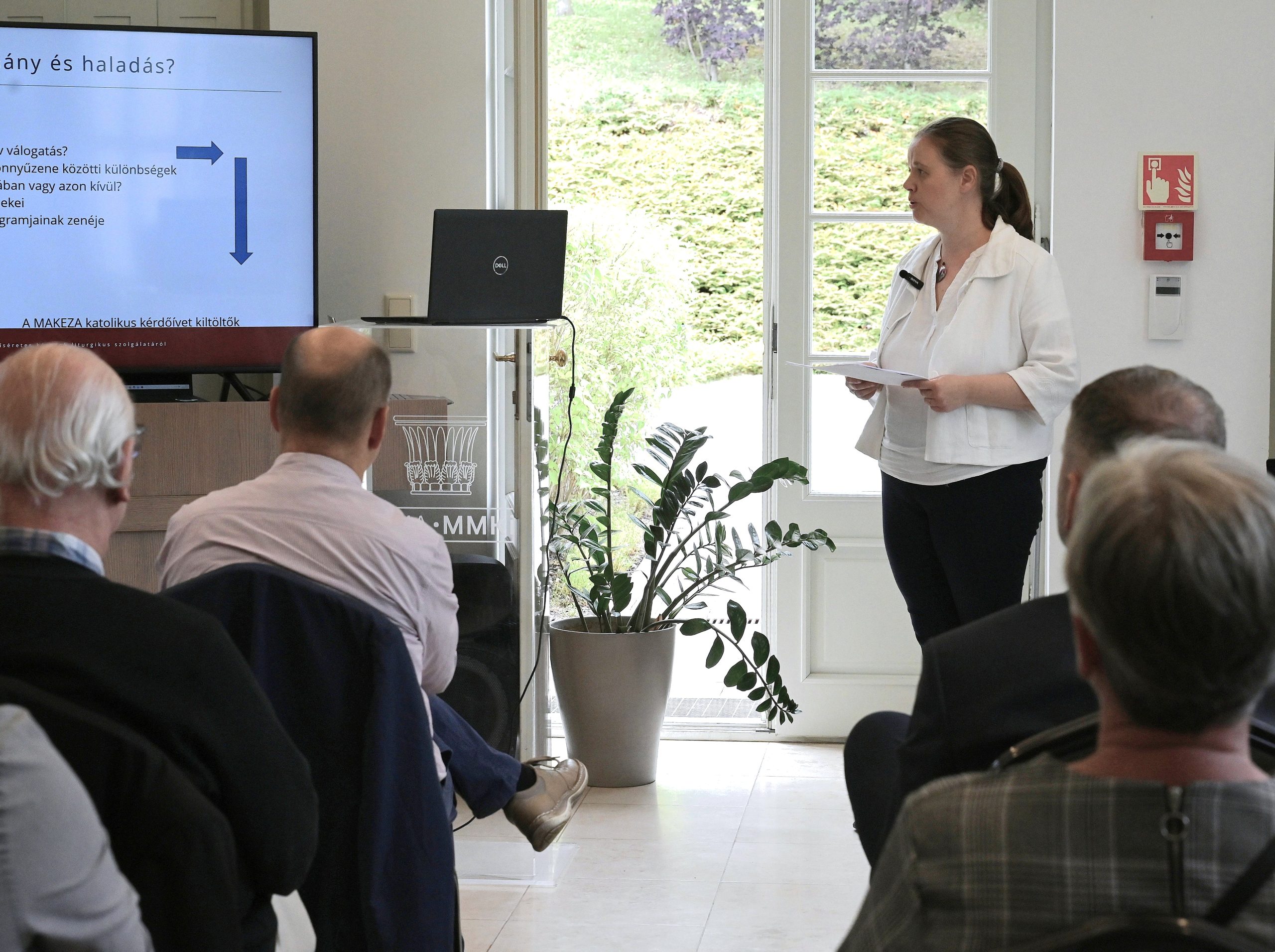
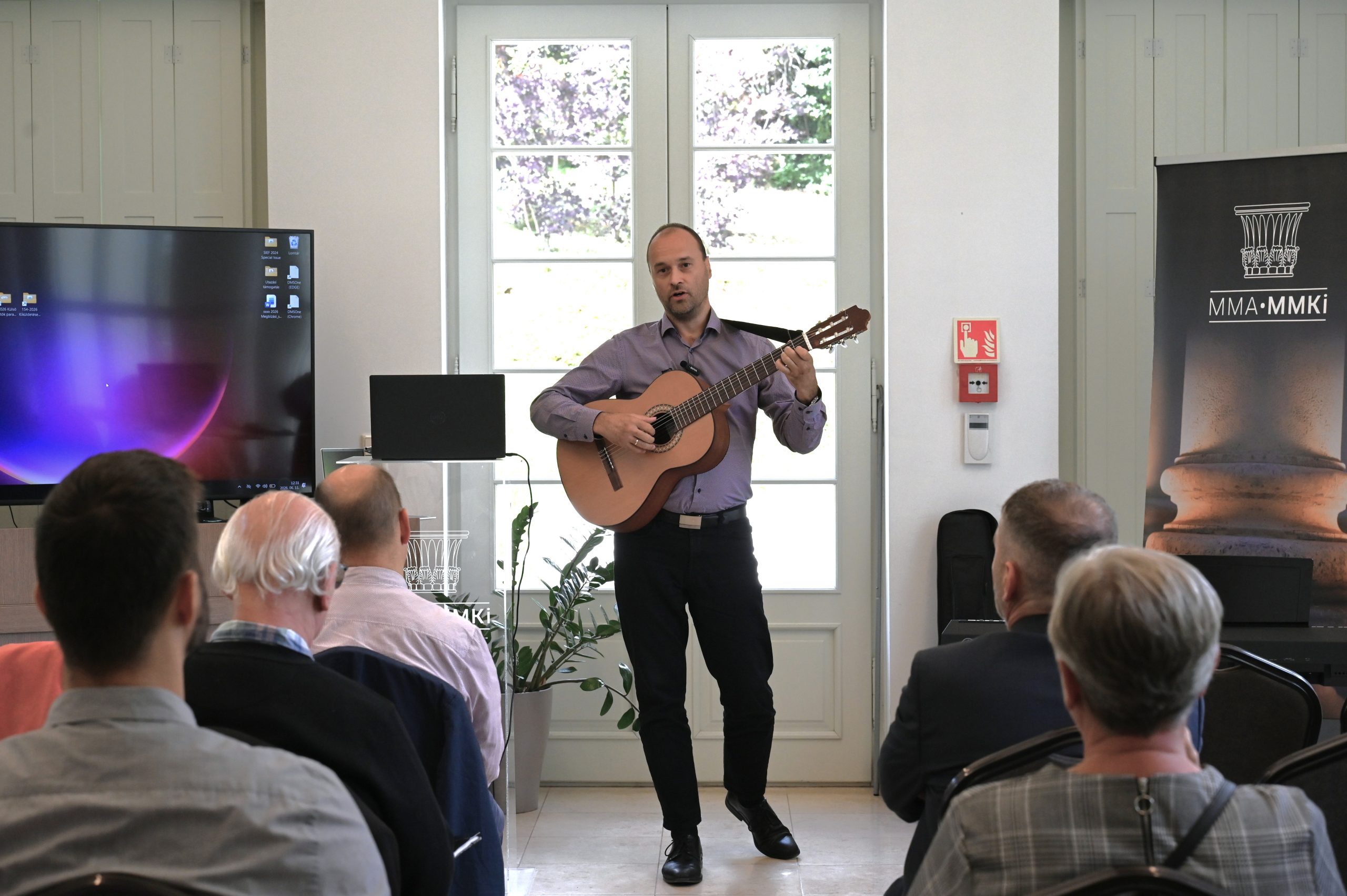
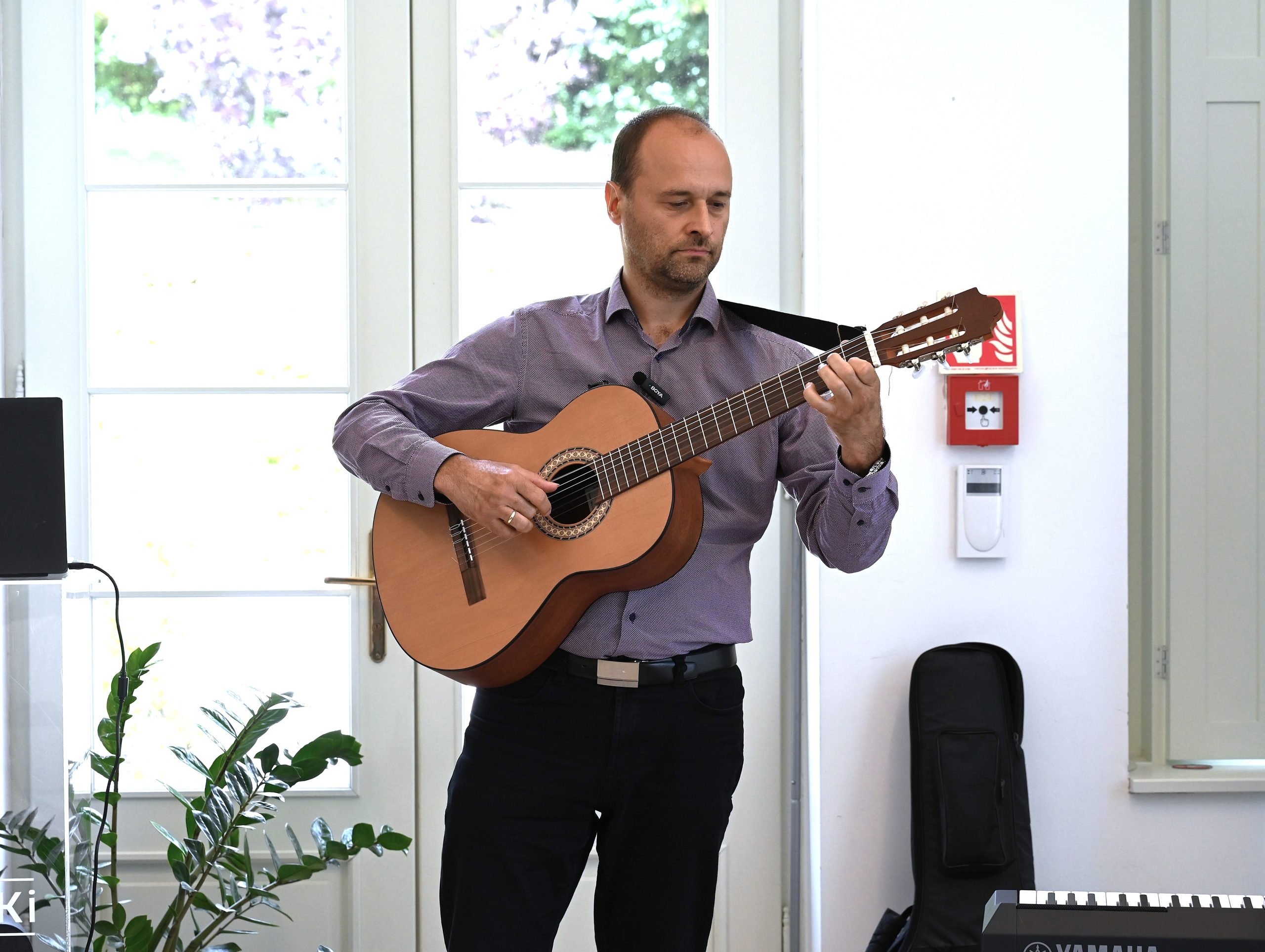
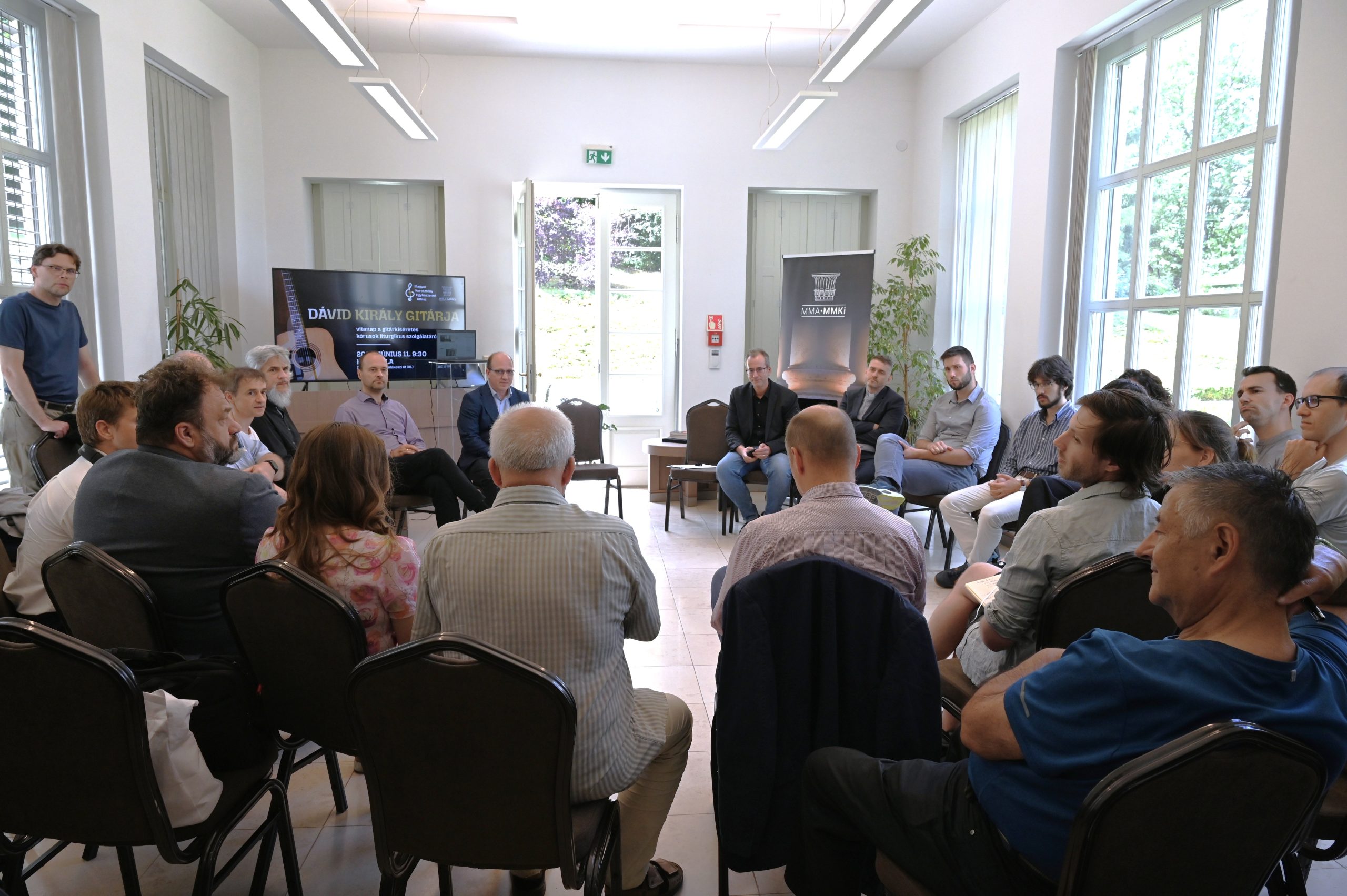
In the beginning of the event, musicians of the Institute played lighter Protestant songs of praise, setting the stage for the pieces to be discussed later during the day. The music being played was not only simple from a harmonic perspective, but the lyrics on screen were also easy to follow, supported by simpler melodies. Given the nature of the topic at hand, the people gathered here sat apart, keeping their distance at first, since the perception of liturgical music accompanied by popular music differs from one denomination to another. Because of this same reason, well-known charismatic songs (e.g. Áldásoddal megyünk, lit. We go with Your blessing) were not sung together, rapport had to be gradually built during the discussions and presentations throughout the event. Márk Nemes, a young researcher of the Institute, presented the results of the previously mentioned study. The link between the distribution of guitar choirs can be found in the age group and not the location. However, this is not a general rule. It’s not something applicable only to young or old groups, Márk noted. He showcased this with a Catholic choir from Tápióság, where middle-aged people preferred songs with guitars, which was also the case for an ecumenically minded group of Adventist scouts.
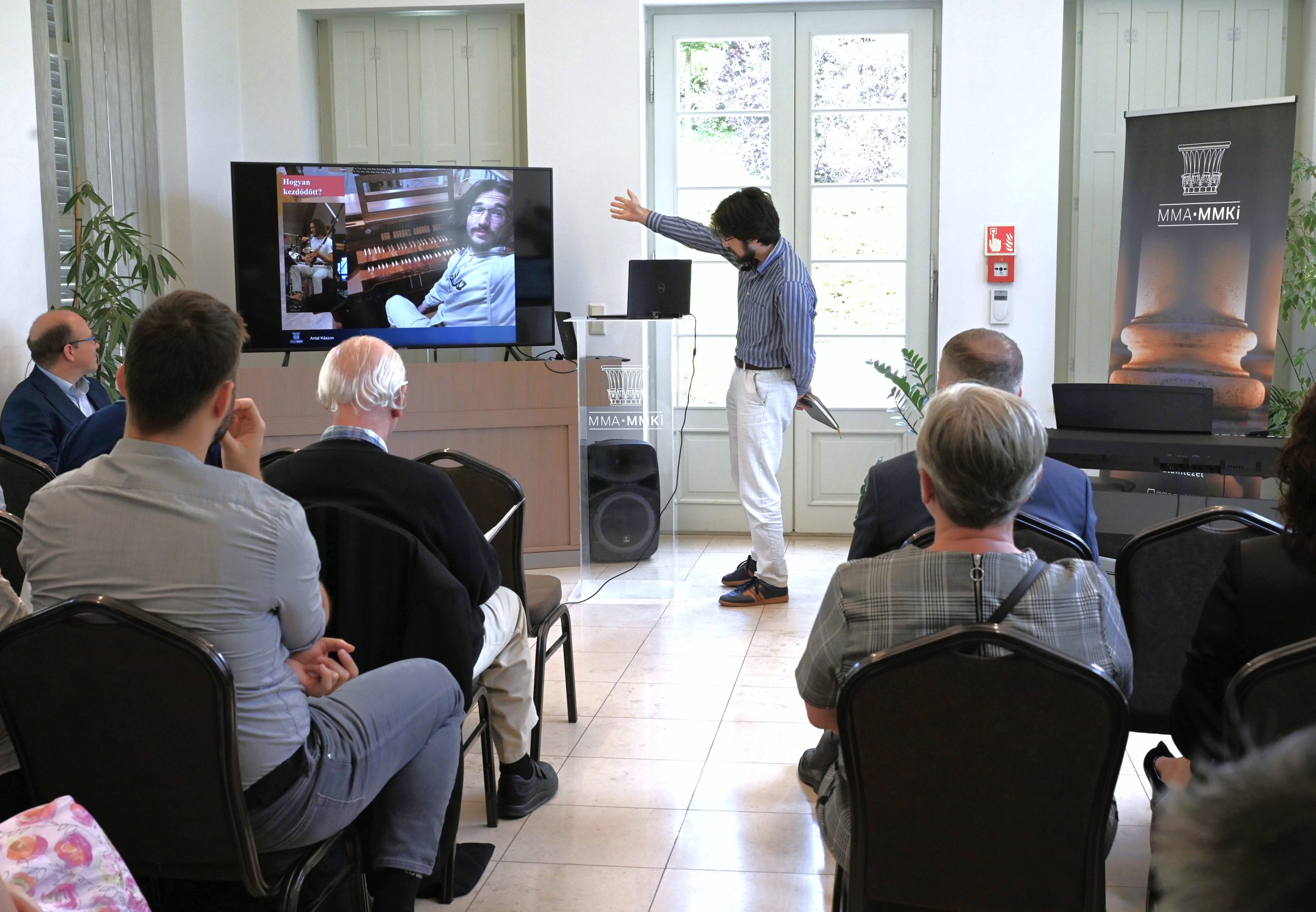
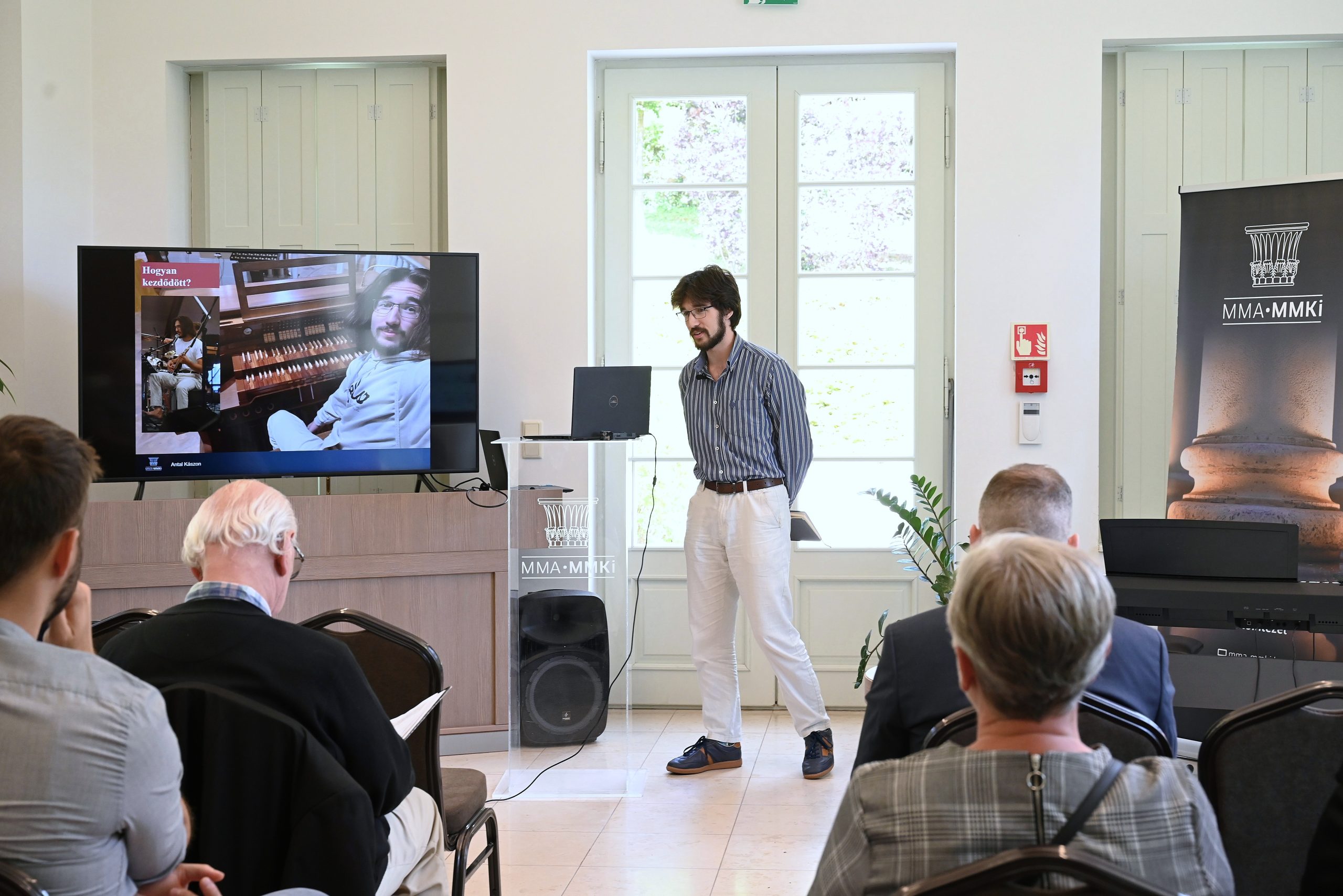
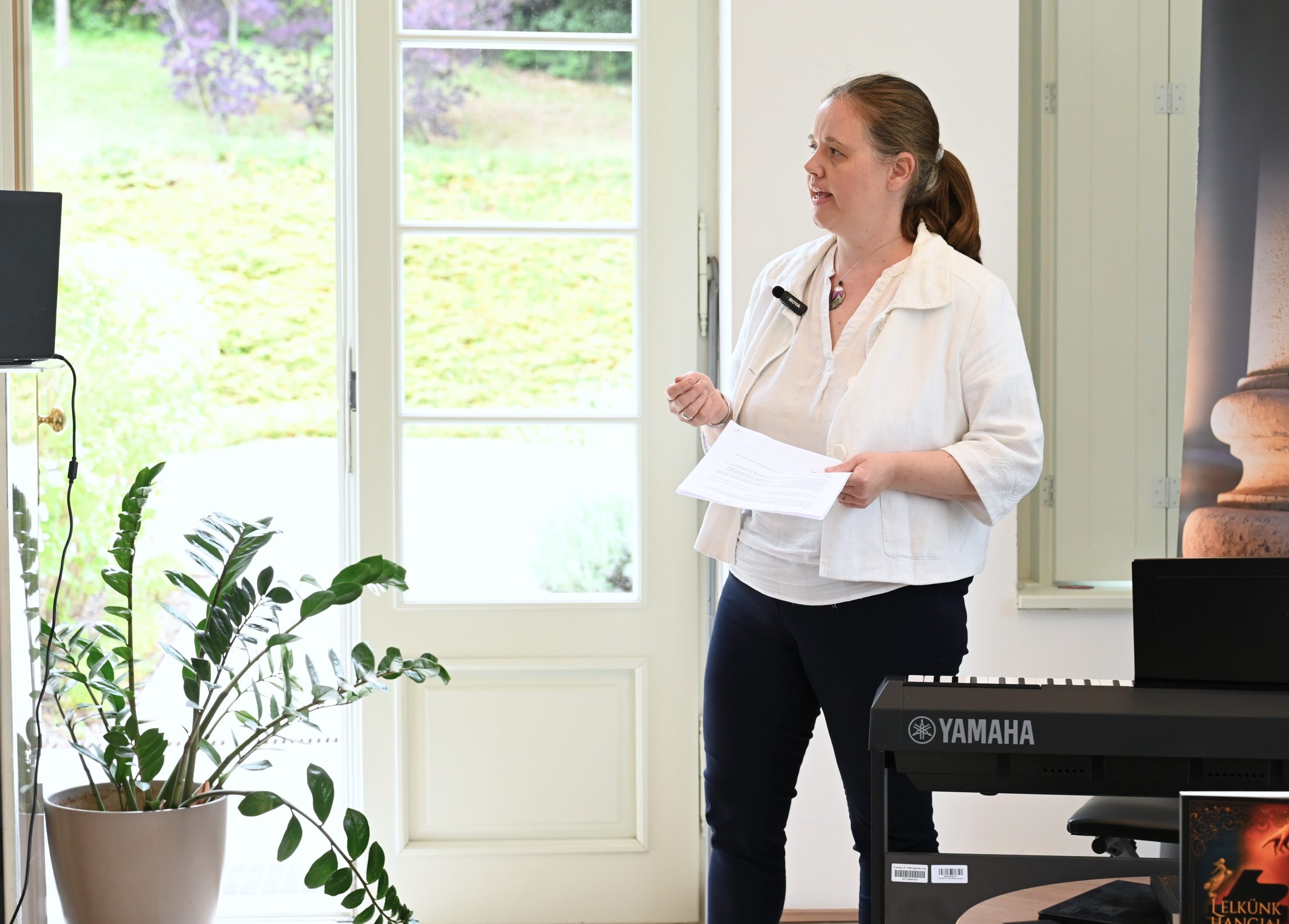
In the first section, three young church musicians (students at the Pázmány Péter Catholic University), who have been singing cantorial music and practicing liturgical services since high school, gave presentations. Zsófia Gulyás, the author of Lelkünk hangjai (2026, https://moly.hu/konyvek/gulyas-zsofia-lelkunk-hangjai), spoke about the subject of her novel. She told stories about the adventures of a Christian pop group, followed up by similar stories of her own. To her and her community, music (not in the traditional and liturgical sense in this case) acts as a strong binding force for both their faith and their love for one another. It also taught them humility. Antal Kászon, the following presenter, spoke about the Pilis and Cegléd Calvinist and Catholic cantorial services. First and foremost, he sees the opportunities granted by traditional and popular liturgical music as a means for connection between the church representatives and members of the congregation. He brought up a mass composed by himself as an example of how implementing Gregorian traditions and the Palestrina style is possible even in a “cool” way, as said by Father Balázs Barsi. (This mass received recognition from the National Franciscan Order.)
The last young speaker was Benedek Tőczik, who currently performs cantorial duties in two Franciscan churches. He presented the musical practices of the Emmanuel Community. Its aim is to perform pieces that members of the community feel belong to them with a refined sense of musicality. This means that lighter pieces are played primarily, rather than motets by Cornelius, Bruckner or Liszt. They regularly sing and play music together in polyphony. Their example demonstrates that not only “serious choirs” and scholas are receptive to polyphonic and complex harmonies. Benedek also recounted the occasion when Bishop János Székely celebrated Mass at the Pázmány Péter Catholic University and specifically asked for the liturgy of the Emmanuel Community, while the university choir would have preferred to sing in Gregorian style. Lastly, Benedek remarked having loved playing the guitar, but preferring to play pieces from Éneklő Egyház (lit. Singing Church) on the organ as of lately.
After the break, researchers began their search for a definition of a guitar choir. Given the nature of a discussion about the traditional and nontraditional Christian repertoire, speakers arrived with a certain professional tension, each of them representing a point of view based on their own denomination. This tension was broken first by Szilárd Kovács (University of Pécs), continuing from where Benedek Tőczik left off: presenting clear examples of how even 16th-century psalm tunes can sound authentic on the guitar. Participants sighed in unison, as they were suddenly transported into the world of Tinódi. However, Szilárd did note that guitar accompaniment can be appropriately applied to only a few pieces from Hozsanna or Éneklő Egyház. The significance of the organ comes from its ability to lead greater masses and crowds, its sound allows worshippers to find their pitch easily, and its rhythm is heard clearly. Therefore, the guitar is not the enemy, but a liturgical tool capable of creating a warm atmosphere in the right hands. Lastly, he made a comment regarding the event, saying King David possessed but a small harp.
Dóra Czakó (Eötvös Loránd University) spoke about the liturgical repertoire played during the two papal visits and the International Eucharistic Congress in Hungary. She pointed out the fact that one-third of the music played there was also made up of nontraditional pieces, including Taizé songs, charismatic music, and popular arrangements. Gergő Csorba (University of Debrecen), who is the organist of the Great Reformed Church in Debrecen, continued the previous topic: he brought up examples of when the guitar and organ can be interchangeable, when the guitar can prove to be beneficial during worship, or when it is more appropriate to stick to the organ instead. Even though he frequently plays movie scores at concerts in the Great Reformed Church, he only chooses liturgically appropriate pieces for church service. In agreement with the previous speakers, he also sees the path of improving the standards of the believers’ musical taste as the right one to follow, which can include the use of the guitar or zither, the most effective combination being a resonant organ and an active cantor.
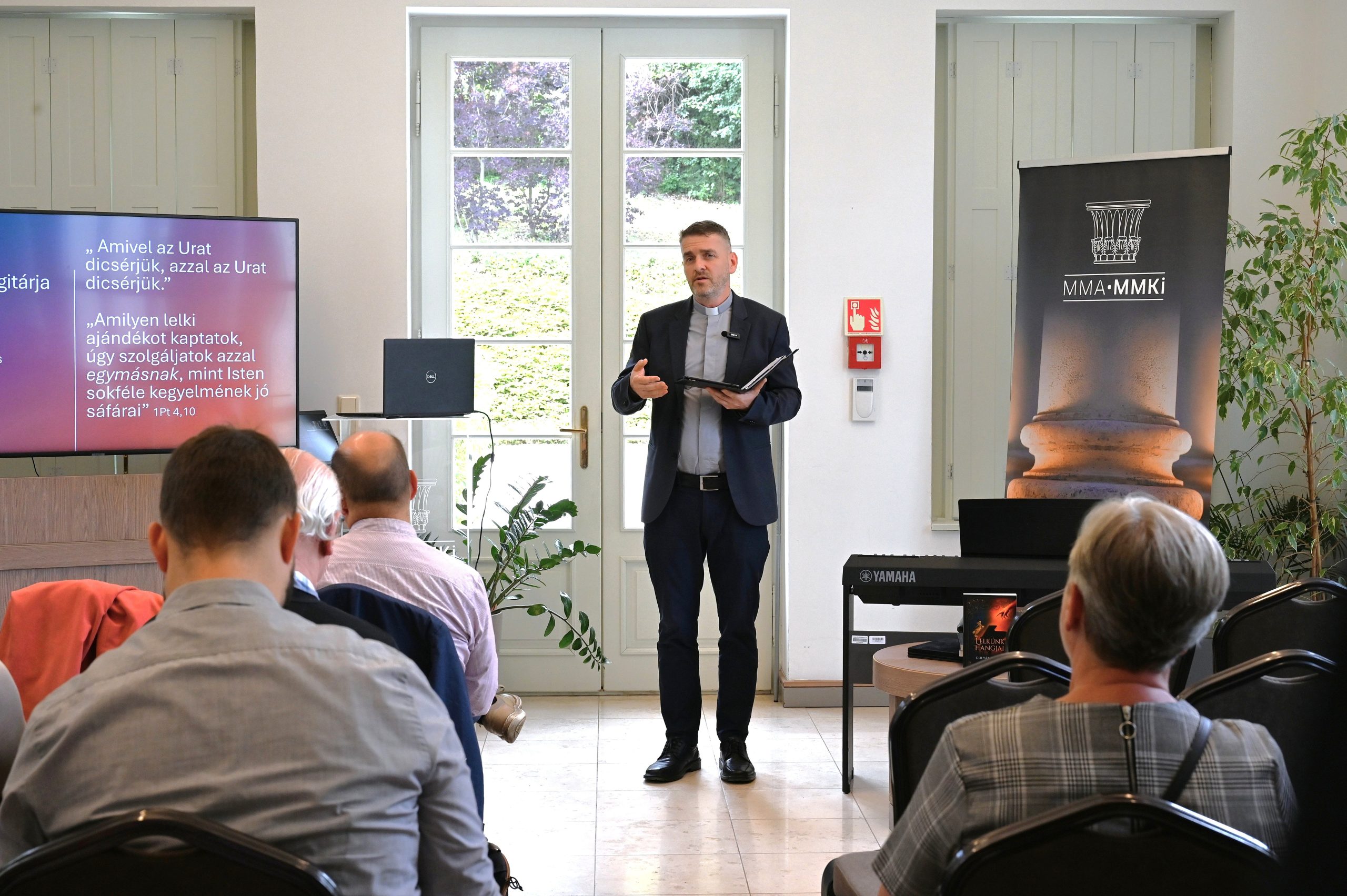
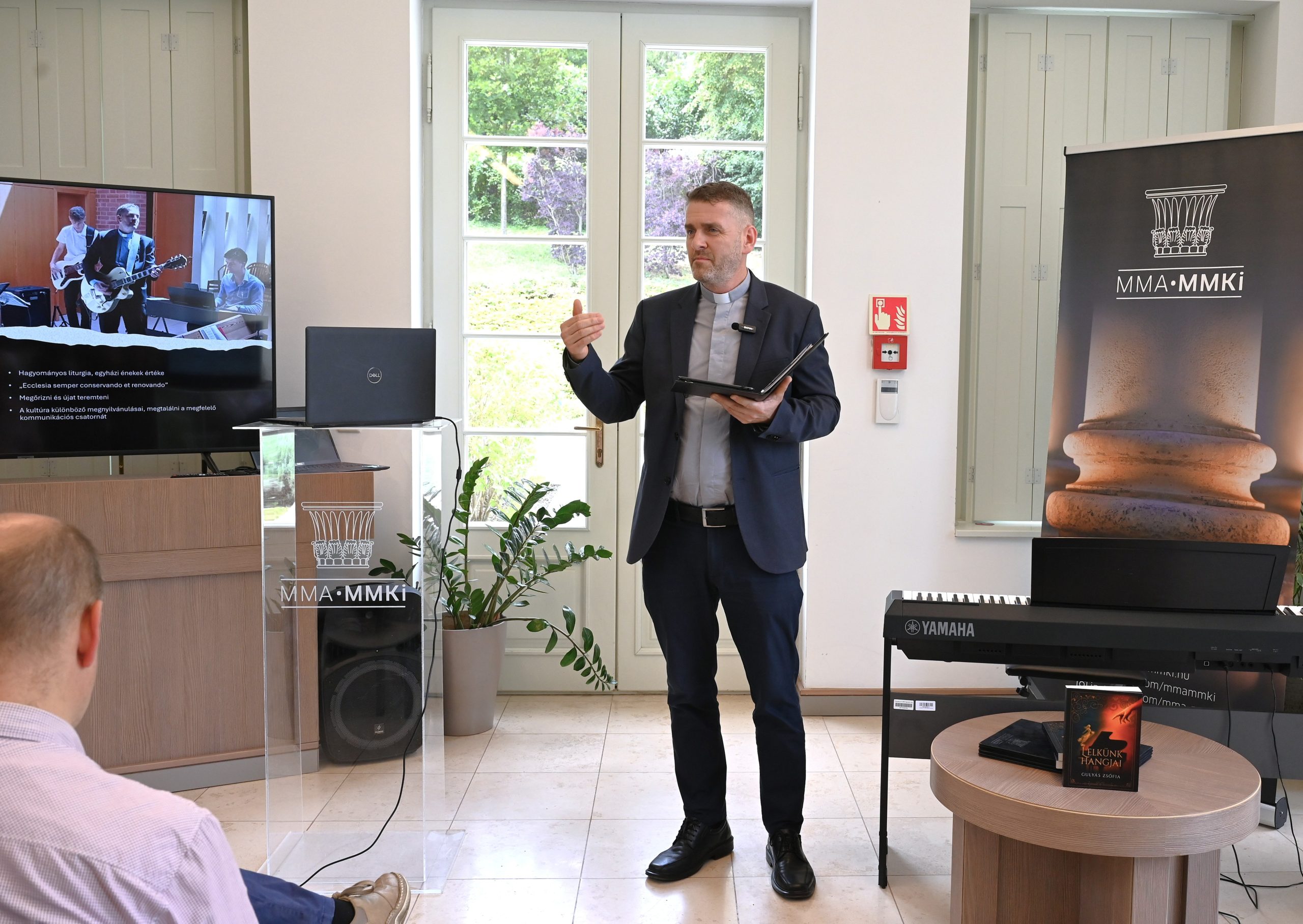
Finally, the keynote speaker of the event, the Reverend Bishop Pál Keczkó of the Evangelical-Lutheran Church of Hungary, also expressed support for the view that the goal of the church (including the denomination of his own) should primarily be spiritual ministry and pastoral care. Numerous tools are available for this purpose, church service in particular, during which liturgy determines the music being played. The introduction of contemporary elements and renewed translations began, inspired by the pop festivals held by partner congregations in Finland. It is in the spirit of such renewal that the Evangelical-Lutheran Mentor Program was launched, where young people learn to play music, write songs and practise liturgy together under the guidance of professional musicians. He also gave an example of his own about going overboard with modernisation. After a year of experimenting, they decided with their congregation that during communion only classical pieces should be played. They did, however, choose to have a separate guitar music event for the youth. Following Bishop Keczkő’s example, a possible solution began to emerge: purposefully separating musical events that follow traditional liturgy and those that deviate from it.
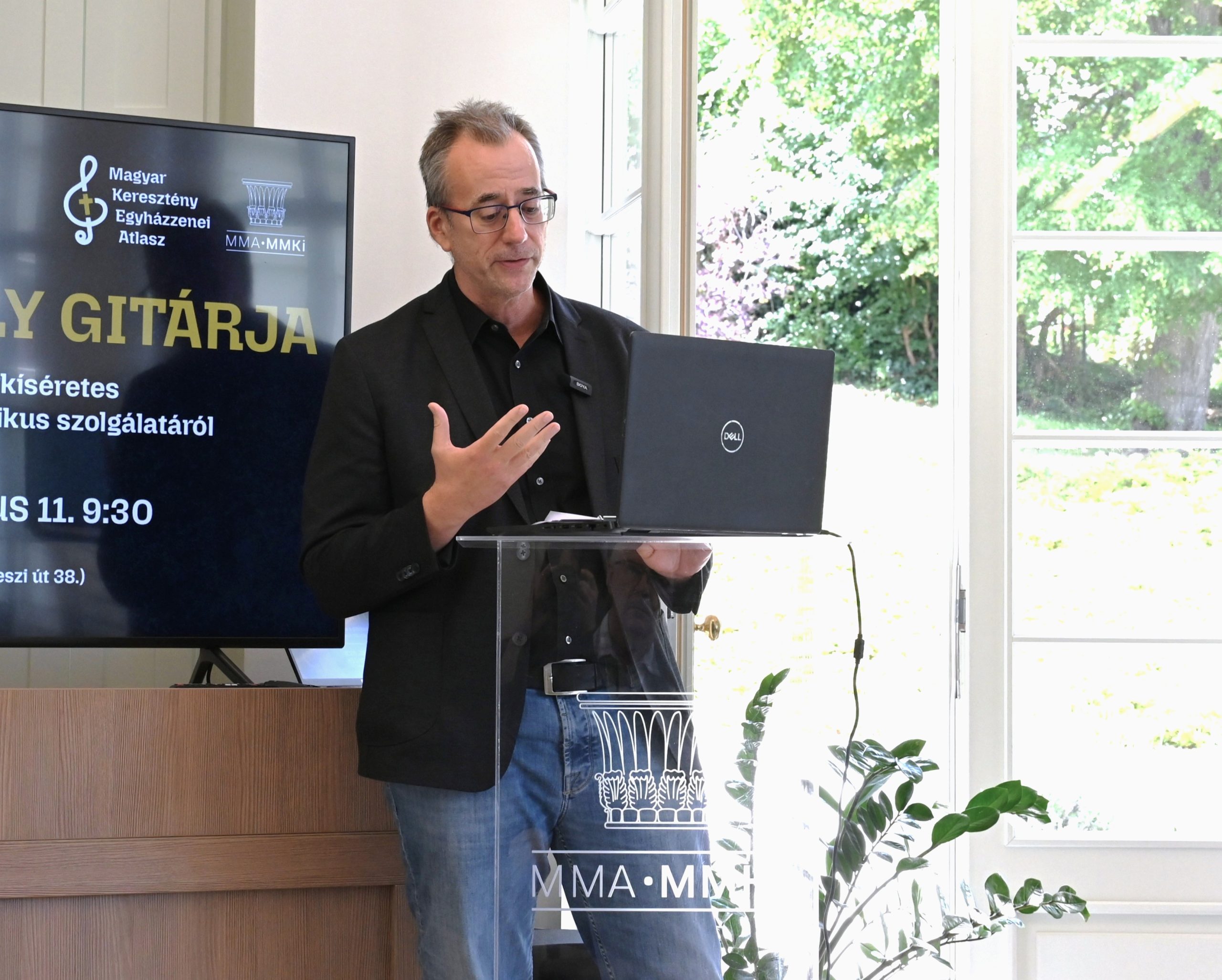
Following a brief lunch break, the debate began. Gergely Horváth, cultural commentator (gondolatkerteszet.hu, dalszerzo.hu, jury member of the Szikra Project) and moderator of the event, shared his experiences of encountering authentic Christianity and how he had spent decades trying to bridge the gap between the music genres embraced by wider audiences and music that is appropriate for liturgical use. His genuine sincerity and honesty laid a solid foundation for the following hour and a half of comments and statements motivated by a desire for mutual understanding.
Many of the participants, such as Szilveszter Rostetter, Zoltán Mizsei, and staff members from the Kazetta Catholic Music Camp also shared their comments. Lastly, Laura K. Puskás (Baptist Theological Seminary, Budapest) delivered the closing remarks: “It’s not the style of music that’s important when we serve God, but the heart with which we serve! Whatever you do, work at it with all your heart, as working for the Lord, not for human masters (Colossians 3:23 NIV).”
And so the symposium ended not with a debate but with a conversation. We are aware that there is no clear consensus yet on the terms being used (popular or classical music), the use of texts (established or custom translations), or the nature of liturgical service itself. However, it was a clear sign of cooperation and long-term partnership that participants were willing to engage in dialogue rather than trying to convince one another. For this reason, participants unanimously asked for the event to continue with a new event, titled “Like David before the Ark of the Lord“, set to take place on 5 October 2026 in Villa-Hild.
Galéria




















 Újdonság!